 English
 Afrikaans
 العربية
 বাংলা
বাংলা bosanski jezik
 Български
 Català
 粤语
粤语 中文(简体)
 中文(漢字)
 Hrvatski
 Čeština
 Nederlands
 Eesti keel
 Suomi
Suomi Français
 Deutsch
 Ελληνικά
 हिन्दी; हिंदी
 Magyar
 Bahasa Indonesia
 Italiano
 日本語
日本語 한국어
한국어 Latviešu valoda
 Lietuvių kalba
 македонски јазик
 Bahasa Melayu
 Norsk
Norsk پارسی
پارسی Polski
 Português
 Română
 Русский
 Cрпски језик
 Slovenčina
 Slovenščina
 Español
 Svenska
 ภาษาไทย
 Türkçe
 Українська
 اردو
اردو Tiếng Việt
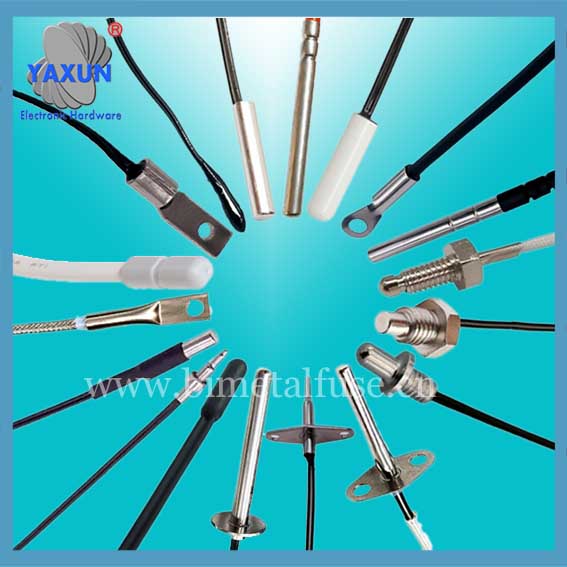
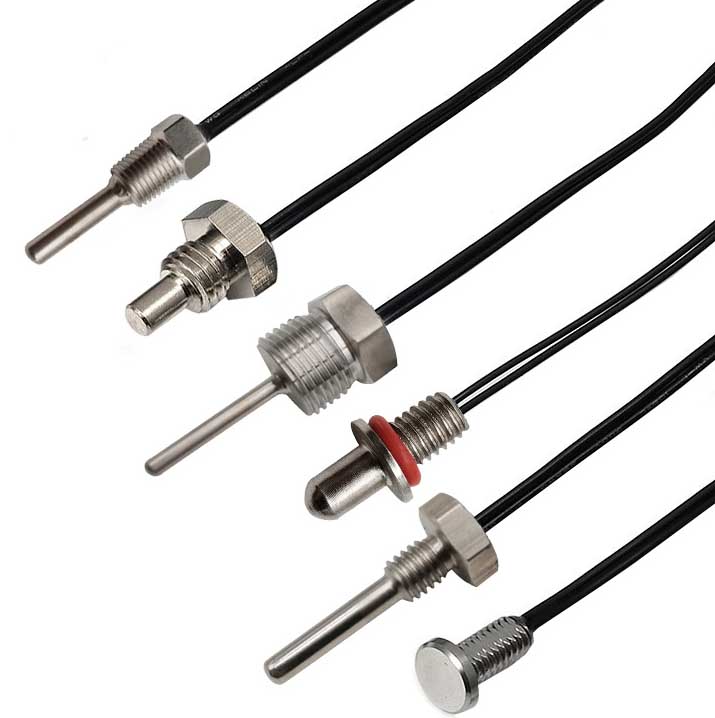
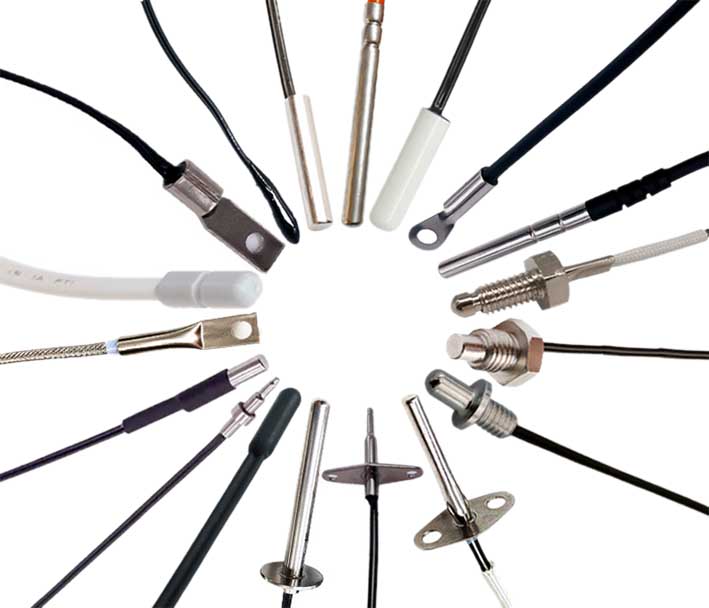

ds18b20 sensor with accuracy up to 0.01℃
Tilpasset ds18b20 sensorsonde og kabel
DS18B20 has 4 main data components:
(1) The 64-bit serial number in the photoetched ROM is photoetched before leaving the factory. It can be regarded as the address serial code of the DS18B20. The arrangement of the 64-bit photolithography ROM is: den første 8 biter (28H) are the product type number, and the next 48 bits are the serial number of the DS18B20 itself. The last 8 bits are the cyclic redundancy check code of the previous 56 biter (CRC=X8+X5+X4+1). The function of photolithography ROM is to make each DS18B20 different, so that multiple DS18B20s can be connected to one bus.
(2) The temperature sensor in DS18B20 can complete the measurement of temperature. Take 12-bit conversion as an example: it is provided in the form of 16-bit sign-extended two's complement reading, expressed in the form of 0.0625°C/LSB, where S is the sign bit.
This is the 12-bit data obtained after 12-bit conversion, which is stored in two 8-bit RAMs of 18B20. Den første 5 bits in binary are the sign bits. Hvis den målte temperaturen er større enn 0, disse 5 biter er 0. Bare multipliser den målte verdien med 0.0625 for å få den faktiske temperaturen. Hvis temperaturen er lavere enn 0, disse 5 biter er 1, and the measured value needs to be inverted, plus 1, og deretter multiplisert med 0.0625 for å få den faktiske temperaturen. For eksempel, the digital output of +125℃ is 07D0H, the digital output of +25.0625℃ is 0191H, the digital output of -25.0625℃ is FE6FH, and the digital output of -55℃ is FC90H.
(3) DS18B20 temperature sensor memory DS18B20. The internal memory of the temperature sensor includes a high-speed scratchpad RAM and a non-volatile electrically erasable EEPRAM, which stores the high-temperature and low-temperature flip-flops TH, TL and structural registers.
(4) Configuration register The meaning of each bit of this byte is as follows:
Bord 3: Configuration register structure
The lower five bits are always "1", and TM is the test mode bit, which is used to set whether the DS18B20 is in working mode or test mode. This bit is set to 0 when DS18B20 leaves the factory, and users should not change it. R1 and R0 are used to set the resolution, as shown in the following table: (DS18B20 is set to 12 bits når de sendes fra fabrikken)
Bord 4: Temperature resolution setting table
4. High-speed temporary storage memory The high-speed temporary storage memory consists of 9 bytes, and its allocation is shown in Table 5. When the temperature conversion command is issued, the converted temperature value is stored in the 0th and 1st bytes of the cache memory in two-byte complement form. The microcontroller can read this data through the single-wire interface. When reading, the low bit is in front and the high bit is in the back. The data format is shown in Table 1. Corresponding temperature calculation: When the sign bit S=0, directly convert the binary bit to decimal; when S=1, first convert the complement to the original code, and then calculate the decimal value. Bord 2 shows some of the corresponding temperature values. The ninth byte is the redundancy check byte.
Bord 5: DS18B20 temporary register distribution
According to the communication protocol of DS18B20, the host (single chip microcomputer) must go through three steps to control DS18B20 to complete temperature conversion: DS18B20 must be reset before each read and write. Etter at tilbakestillingen er vellykket, a ROM command is sent, and finally a RAM command is sent, so that the predetermined operation can be performed on the DS18B20. Reset requires the main CPU to pull the data line down for 500 microseconds and then release it. When DS18B20 receives the signal, it waits for about 16 til 60 mikrosekunder, and then sends out a low pulse of 60 til 240 mikrosekunder. The main CPU receives this signal to indicate successful reset.
Bord 6: ROM instruction list