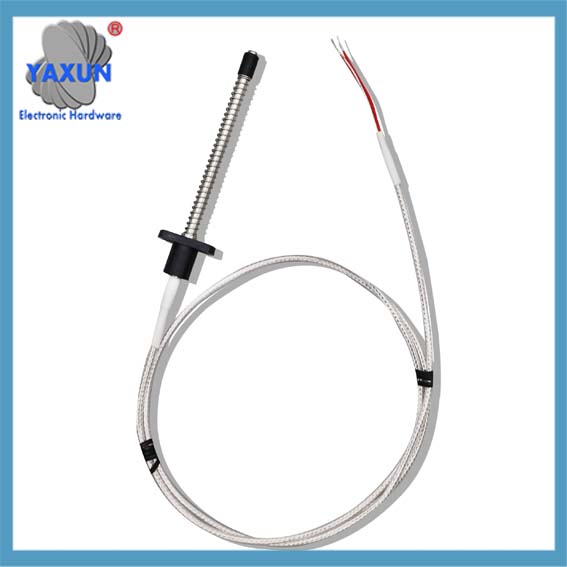
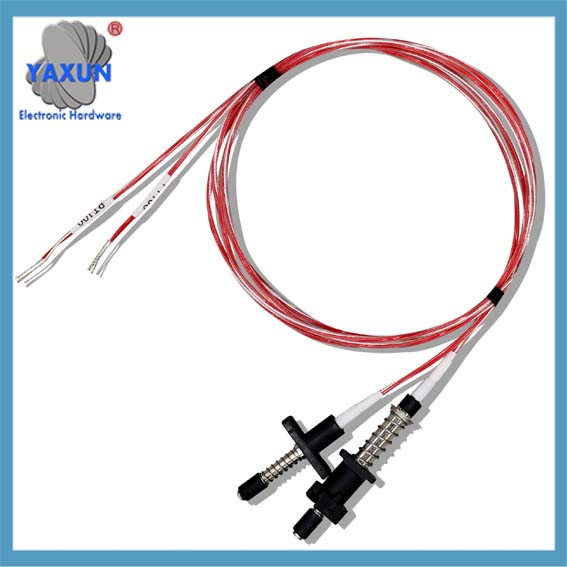
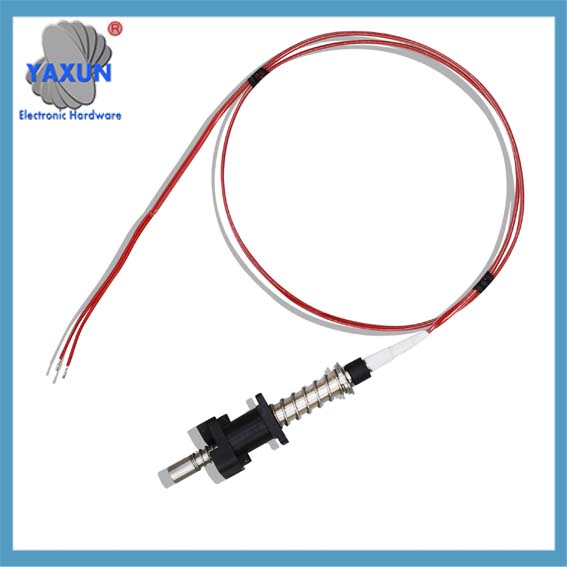
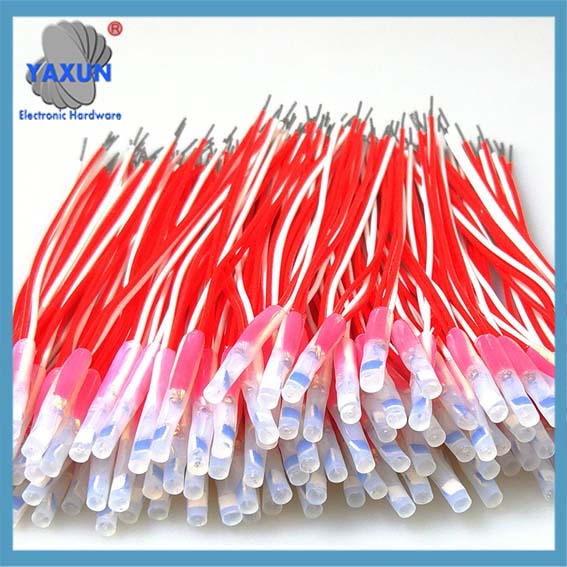
PT100 und PT1000 sind Platin-Widerstandstemperatursensoren. Ihr Funktionsprinzip beruht auf der Eigenschaft, dass der elektrische Widerstand von Platindraht mit steigender Temperatur zunimmt (d.h., ein positiver Temperaturkoeffizient, oder PTC). Beide bieten die Vorteile einer hohen Genauigkeit und einer hervorragenden Stabilität.
Ihr grundlegendster Unterschied liegt in ihrem Nennwiderstandswert bei 0 °C: Der PT100 hat einen Widerstand von 100 Ω, während der PT1000 einen Widerstand von 1000 Ω hat. Dieser scheinbar geringfügige Unterschied führt zu unterschiedlichen Schwerpunkten hinsichtlich ihrer Leistungsmerkmale und anwendbaren Szenarien.
📊 Vergleich der Kernleistungsunterschiede
| Eigenschaften |
PT100 |
PT1000 |
Auswirkungen auf Lithium-Ionen-Batterieanwendungen |
| Widerstand bei 0 ° C. |
100 Oh |
1000 Oh |
Die grundlegende Ursache aller nachfolgenden Leistungsunterschiede. |
| Empfindlichkeit |
Ca. 0.385 Ω/°C |
Ca. 3.85 Ω/°C (10 mal höher) |
Der PT1000 weist eine stärkere Signalschwankung auf und reagiert empfindlicher auf geringfügige Temperaturschwankungen. |
| Störfestigkeit |
Niedrig (Erheblicher Einfluss durch Bleiwiderstand) |
Stark (Minimaler Einfluss durch Leitungswiderstand) |
Der PT1000 eignet sich besser für BMS-Verkabelungen mit längeren Anschlusskabeln; Es ermöglicht die Verwendung einer Standard-Zweidrahtkonfiguration, wodurch die Kosten gesenkt werden. |
| Stromverbrauch und Eigenerwärmung |
Hoch (Erfordert einen höheren Erregerstrom) |
Untere (Erfordert einen geringeren Strom) |
Der PT1000 erzeugt eine minimale Eigenerwärmung, Dies führt zu präziseren Messungen – ein entscheidender Faktor in Szenarien mit geringem Stromverbrauch, wie z. B. bei Batteriepacks. |
| Typische Genauigkeit |
Hoch (Z.B., Klasse A: ±0,15°C) |
Hoch (Z.B., Klasse A: ±0,15°C) |
Beide Typen sind in der Lage, ein hohes Maß an Präzision zu erreichen und die Anforderungen von BMS-Anwendungen zu erfüllen. |
| Kosten und Verbreitung |
Industriestandard, niedrige Kosten, weithin angenommen |
Etwas höhere Kosten; zunehmender Beliebtheit |
Der PT100 ist häufiger in herkömmlichen industriellen Steuerungssystemen anzutreffen. |
🔍 So wählen Sie Lithiumbatterieanwendungen aus?
In praktischen Batteriemanagementsystemen (BMS) und Batterietestumgebungen, Der PT1000 setzt sich immer weiter durch. Dieser Trend wird vor allem durch seine Vorteile in den folgenden Schlüsselbereichen vorangetrieben:
Vorteil 1: Starke Störfestigkeit und vereinfachtes Design: Die Widerstandsänderungsrate ist bei einem PT1000 zehnmal so hoch wie bei einem PT100. Dies bedeutet, dass der Widerstand den Verbindungsdrähten selbst innewohnt (typischerweise mehrere zehn Milliohm pro Meter) trägt nur ein Zehntel so viel zum gesamten Messfehler bei wie ein PT100. Folglich, in BMS-Anwendungen mit langen Verkabelungsstrecken, Der PT1000 kann ein einfaches Zweidraht-Anschlussschema verwenden, wohingegen der PT100 eine komplexere Drei- oder Vierleiterkonfiguration erfordern würde, um Drahtwiderstandsfehler auszugleichen.
Vorteil 2: Geringer Stromverbrauch und Unterdrückung von Selbsterwärmungseffekten: Der Stromverbrauch eines PT1000 ist deutlich geringer als der eines PT100. Im Kontext des Batteriemanagements, Dies bedeutet, dass der Sensor selbst nur minimale Wärme erzeugt, und verhindert so dies “falsche Berichterstattung” eine erhöhte Temperatur; Außerdem, Sein geringer Stromverbrauch trägt zu einem geringeren Gesamtenergieverbrauch innerhalb des BMS bei.
Vorteil 3: Eignung für interne Einbettungstechnologien der nächsten Generation: Der aktuelle Stand der Technik besteht darin, PT1000-Sensoren direkt in Lithiumbatterien einzubetten, Ermöglicht eine echte Echtzeitüberwachung des Batterieinneren “Kerntemperatur.”
Leistungsvalidierung: Eine Studie durchgeführt in 2025 bestätigte dies, als PT1000-Mikrosensoren direkt auf der Anode einer Batterie integriert wurden, die Kapazitätserhaltungsrate der Batterie – danach 300 Lade-Entlade-Zyklen – unterschieden sich nur um einiges von denen einer Standardbatterie 0.75%, Dies zeigt einen vernachlässigbaren Einfluss auf die elektrochemische Leistung. Eine bemerkenswerte Entdeckung: Ein implantierter PT1000-Sensor zeigte dies, wenn eine Batterie von außen auf 120 °C erhitzt wurde, Die tatsächliche Innentemperatur betrug nur 104,6 °C – was zu einem Temperaturunterschied von bis zu 15 °C zwischen Innen- und Außenbereich führte. Dies zeigt eindeutig die erhebliche Messverzögerung, die externen Sensoren innewohnt, Dies unterstreicht den entscheidenden Wert des PT1000 für eine präzise Überwachung.
💡 So wählen Sie aus?
Allgemein gesprochen, bei der Entscheidung zwischen einem PT100 und einem PT1000, Die folgenden Grundsätze können als Orientierung dienen:
Priorisieren Sie den PT1000: Für die meisten neu entwickelten Batteriemanagementsysteme (BMS), Prüfgeräte für Akkupacks, und Anwendungen, bei denen es auf hohe Präzision und geringen Stromverbrauch ankommt, Der PT1000 ist normalerweise die bessere Wahl. Es vereinfacht effektiv das Schaltungsdesign und liefert zuverlässigere Messdaten.
Szenarien zur Auswahl des PT100: Wenn Ihr System Kompatibilität mit einer großen installierten Basis vorhandener Industrieanlagen erfordert (B. bestimmte SPS oder Temperaturregler, die PT100-Eingänge nativ unterstützen), oder wenn Sie äußerst kostensensibel sind, Der PT100 bleibt dank seines Status als Industriestandard und seiner geringeren Kosten eine zuverlässige Option.
🛠️ Unterstützende Schaltkreise und Werkzeuge
Egal für welchen Sensor Sie sich entscheiden, Zum Auslesen der Signale benötigen Sie entsprechende Schaltkreise oder Module:
Dedizierte Temperaturmessmodule: Auf dem Markt sind bereits ausgereifte Module erhältlich – etwa das ZAM6228 –, die den direkten Anschluss von unterstützen 8 Kanäle von 3-Leiter-PT100-Sensoren. Bietet eine Messgenauigkeit von ±0,1 °C und eine Auflösung von 0,01 °C, Diese Module sind ideal für mehrkanalige Batterieprüfschränke geeignet.
Batterietestsysteme: Professionelle Hersteller von Batterietestgeräten – wie Arbin – bieten auch spezielle PT100-RTD-Module an. Diese Module nutzen hochpräzise 4-Leiter-Messtechniken, Erreichen einer Genauigkeit auf Modulebene von ±0,1 °C.
Entwerfen Sie derzeit eine BMS-Schaltung oder führen Sie Batterietests durch?? Wenn es sich um ein neues Projekt handelt, Ich empfehle dringend, sich direkt für den PT1000 zu entscheiden, um das Design der Störfestigkeit zu vereinfachen; Jedoch, wenn Kompatibilität mit älteren Geräten erforderlich ist, Die Wahl des PT100 wäre die umsichtigere Wahl. Möchten Sie, dass ich Ihnen weitere Einzelheiten zum spezifischen Design der Signalerfassungsschaltung mitteile??
 English
 Afrikaans
 العربية
 বাংলা
বাংলা bosanski jezik
 Български
 Català
 粤语
粤语 中文(简体)
 中文(漢字)
 Hrvatski
 Čeština
 Nederlands
 Eesti keel
 Suomi
Suomi Français
 Deutsch
 Ελληνικά
 हिन्दी; हिंदी
 Magyar
 Bahasa Indonesia
 Italiano
 日本語
日本語 한국어
한국어 Latviešu valoda
 Lietuvių kalba
 македонски јазик
 Bahasa Melayu
 Norsk
Norsk پارسی
پارسی Polski
 Português
 Română
 Русский
 Cрпски језик
 Slovenčina
 Slovenščina
 Español
 Svenska
 ภาษาไทย
 Türkçe
 Українська
 اردو
اردو Tiếng Việt