 English
 Afrikaans
 العربية
 বাংলা
বাংলা bosanski jezik
 Български
 Català
 粤语
粤语 中文(简体)
 中文(漢字)
 Hrvatski
 Čeština
 Nederlands
 Eesti keel
 Suomi
Suomi Français
 Deutsch
 Ελληνικά
 हिन्दी; हिंदी
 Magyar
 Bahasa Indonesia
 Italiano
 日本語
日本語 한국어
한국어 Latviešu valoda
 Lietuvių kalba
 македонски јазик
 Bahasa Melayu
 Norsk
Norsk پارسی
پارسی Polski
 Português
 Română
 Русский
 Cрпски језик
 Slovenčina
 Slovenščina
 Español
 Svenska
 ภาษาไทย
 Türkçe
 Українська
 اردو
اردو Tiếng Việt
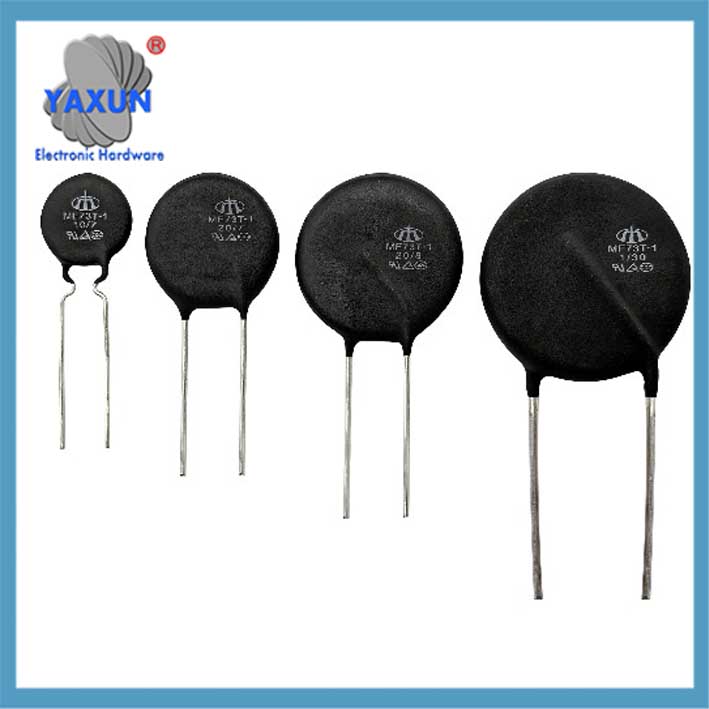
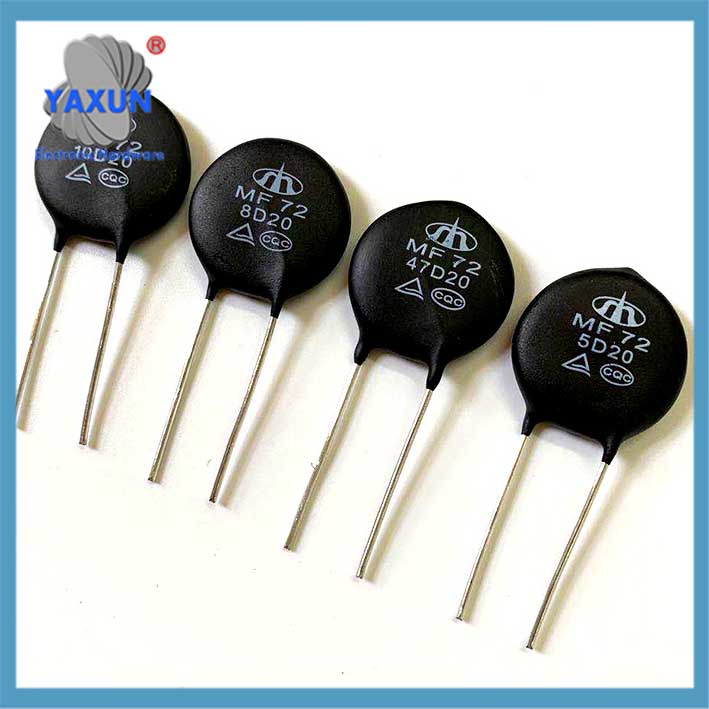
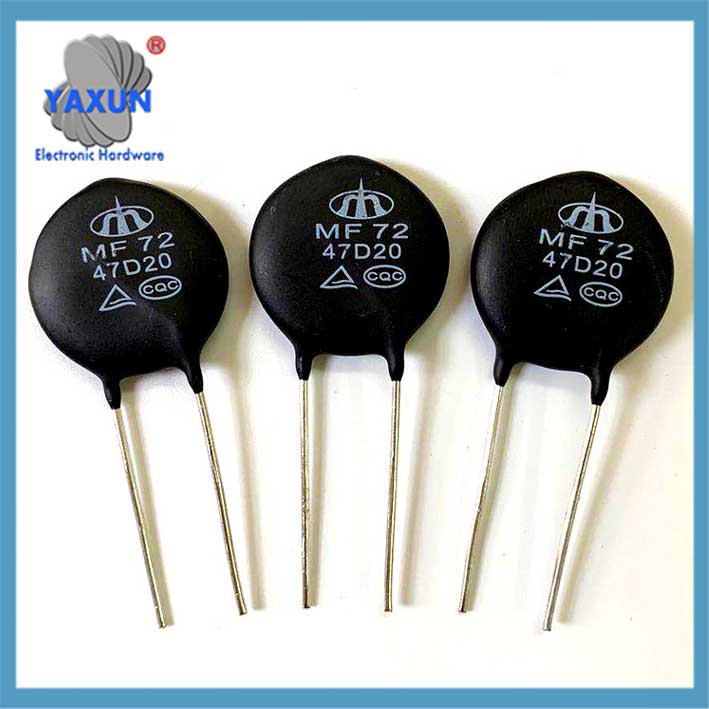
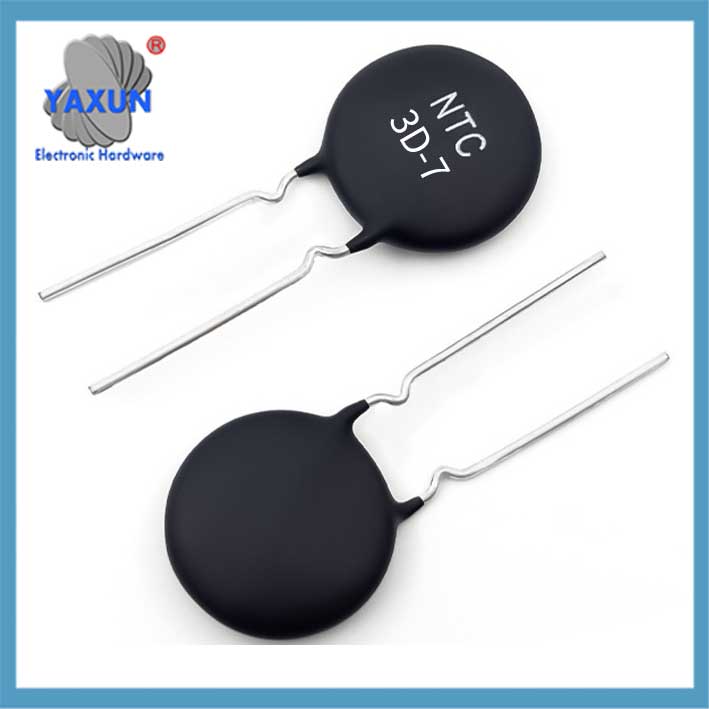

Power thermistor (mainly negative temperature coefficient NTC type) is a key component for suppressing surge current in electronic circuits. Its main parameters, selection points and application scenarios are as follows:
eu. Core functions and principles
Surge current suppression
At the moment of power startup, the NTC resistance value connected in series in the input circuit is high, which can limit the peak current; after power is turned on, the resistance drops rapidly due to heat (power consumption can be ignored), ensuring the stable operation of subsequent circuits.
Negative temperature characteristics
The resistance value decreases exponentially with increasing temperature: R(T)=R0⋅eB⋅(1T−1T0)R(T)=R0⋅eB⋅(T1−T01) (R0R0 is the resistance value at 25℃, BB is the material constant).
|
Termistor NTC de mare putere MF72 |
Putere termistor NTC tip 10D, 5D., 8D termistor cu coeficient de temperatură negativ |
How to Use NTC Thermistors for Inrush Current Limiting |
How it Works:
High Initial Resistance:
When power is first applied, a power thermistor has a high resistance, which limits the initial inrush current.
Self-Heating:
As the current flows through the thermistor, it generates heat, causing its resistance to decrease.
Resistance Decrease:
The reduction in resistance allows the circuit to draw the necessary operating current without the initial surge.
Beneficii:
Protects Equipment:
By limiting the inrush current, power thermostats prevent damage to sensitive components and equipment.
Reduces Power Loss:
The resistance decrease through self-heating reduces power loss compared to using a fixed resistor.
Energy Savings:
Lowering power loss can lead to energy savings in applications like switching power supplies and other electrical devices.
II. Key parameters and selection points
| Parametrii | Definition and selection significance | Typical value/range |
| Rated zero power resistance (R25) | The nominal resistance at 5°C determines the initial surge suppression capability. Calculation formula: R25≈U2⋅IsurgeR25≈2⋅IsurgeU (UU is the input voltage, IsurgeIsurge is the surge current) | Commonly used 2.5Ω, 5Oh, 10Ω±(15-30)% |
| Maximum steady-state current | The current that can be sustained for a long time at 25℃, needs to be greater than the circuit working current | Depending on the model 0.5A~tens of amperes |
| Residual resistance | The minimum resistance value at high temperature (such as 100℃), affecting the normal power consumption of the circuit | About 1/10~1/20 of R25 |
| valoarea B | Material constant (measured at 25℃~50℃), determines the slope of the resistance-temperature curve; high B value responds quickly but has high cost | 2000K~6000K |
| Constanta de timp termica | Response speed index, patch type (such as SMD) can reach seconds | Glass seal/enameled wire type about 10~60 seconds |
Nota: Example of model identification MF72-10D-9:
10: R25=10Ω.
D: Disc package
9: 9mm diametru;
III. Scenarii tipice de aplicare
Power supply equipment: Input surge suppression of switching power supply, UPS, adapter;
Lighting system: Anti-shock protection of LED driver, ballast, lighting distribution box;
Echipamente industriale: Motor start, industrial power supply, medical instrument;
Aparatele de uz casnic: Aer conditionat, refrigerator compressor start protection;
Iv. Selection and avoidance guide
Potrivirea curentă
The maximum steady-state current needs to be greater than 1.5 times the actual working current to avoid continuous heating and failure.
Heat dissipation design
In high-power scenarios, sufficient spacing or auxiliary heat dissipation is required to prevent excessive temperature rise from causing insufficient residual resistance.
Extreme temperature
The operating temperature range is generally -55℃~+125℃. Glass-sealed models (resistant to 150℃) are preferred in high-temperature environments.
V. Package and performance comparison
| Package type |
Avantaje | Applicable scenarios |
| Epoxy resin | Cost scăzut, good waterproofness | Home appliances, ordinary power supplies |
| Glass package | High temperature resistance (>150℃), raspuns rapid | Industrial equipment, automotive electronics |
| Surface mount type (SMD) | Dimensiune mică, potrivit pentru PCB de înaltă densitate | Compact power module |
Tip: Be cautious in frequent switching scenarios – NTC may lose surge suppression capability when insufficient cooling is insufficient. În acest moment, a parallel relay bypass can be connected.